192 hr
8-Day Cairo, Luxor & Aswan Tour with Nile Cruise
- Expert local guide
- Small group
- Skip-the-line access
- Free cancellation
Nile Cruise from Cairo to Luxor and Aswan – Multi-Day River Journeys
Sail past temple-lined banks and desert horizons, four to eight days on Africa's longest river
Compare fares, pick the fit — all bookings are mobile-voucher and eligible for free cancellation where shown.
192 hr
144 hr
96 hr
Selecting the right nile cruise from cairo to luxor and aswan requires choosing between comprehensive packages that integrate domestic logistics and guided explorations of ancient landmarks along the river. These curated nile cruise from cairo to luxor and aswan tours ensure seamless transitions between Cairo and the temples of Upper Egypt.
|
Top pick Standard Cruise-Tour Full-Service Package |
Economy Transit-Cruise Basic Vessel Passage | |
|---|---|---|
| Duration | 4 to 7 nights | 3 to 4 nights |
| Inclusions | Full board, flights, guide, entry tickets | Full board, boat cabin only |
| Transportation | Domestic flights and private transfers | Self-arranged transit to port |
| Wait time | Scheduled per itinerary | Subject to availability |
| Best for | First-timers seeking ease | Budget-focused independent travelers |
| See tickets & prices |
Verdict: For the most reliable experience, first-time visitors should choose the Full-Service Package as these nile cruise from cairo to luxor and aswan tickets typically cover all essential logistics and archaeological site access.
Worth it for comfort-focused travelers seeking comprehensive experiences
A nile cruise from cairo to luxor and aswan delivers exceptional value for travelers who prioritize hassle-free logistics and comprehensive monument access. The available packages range from 4-day Aswan-to-Luxor segments to 8-day Cairo-inclusive journeys, bundling accommodation, guided temple visits, onboard meals, and inter-city transport into a single upfront cost. This eliminates the complexity of booking separate hotels, arranging private transfers between Karnak Temple, Valley of the Kings, Philae Temple, and Abu Simbel, and coordinating qualified Egyptologists for each site. The cruise format suits those who value waking up at new archaeological sites without repacking luggage daily. However, the structured itinerary constrains spontaneous exploration—shore excursions follow fixed schedules, limiting time for independent wandering through Luxor's souk or Aswan's Nubian villages. Multi-day Nile cruises from Cairo provide maximum convenience for first-time visitors unfamiliar with Egypt's transport infrastructure, though experienced travelers comfortable with independent train travel and hotel-hopping may find the guided format restrictive. The all-inclusive model pays off when you calculate separate costs for comparable hotels, private transport, and entrance fees with expert commentary.
Bottom line: Book a nile cruise from cairo to luxor and aswan tour if convenience and comprehensive sightseeing outweigh the desire for unstructured exploration.
A nile cruise from cairo to luxor and aswan provides a relaxing river-focused journey, whereas land-based excursions offer deeper flexibility for visiting ancient archeological landmarks.
|
Top pick Nile Cruise |
Land-Based Tours | |
|---|---|---|
| Primary transit | River ship | Private vehicle and domestic flights |
| Viewpoint | Panoramic river landscapes | Direct temple and museum access |
| Pace | Structured daily schedule | Customizable itinerary flow |
| Duration | 3 to 14 days | Variable (1 to 21 days) |
| Average cost | 1,200–4,000 USD | 800–3,500 USD |
| Comfort | Constant cabin lodging | Varying hotel accommodations |
| Group dynamic | Shared ship amenities | Private or small group transport |
| See tickets & prices |
Verdict: Those prioritizing relaxation and scenery should book nile cruise from cairo to luxor and aswan tours, while travelers seeking specific nile cruise from cairo to luxor and aswan tickets for sites off the river should choose land-based routes. Select your preferred nile cruise from cairo to luxor and aswan tour based on whether you value river transit or ground-level exploration.
Hand-picked experiences loved by thousands of travelers
6 days
Free Cancellation
Explore pyramids, temples, and tombs on a comprehensive Egyptian journey from Cairo to Aswan
4 days
Free Cancellation
Sail the legendary Nile from Aswan to Luxor, exploring ancient temples and royal tombs with an expert guide
4 days
Free Cancellation
Drift over Luxor at dawn, sail the Nile, and discover pharaonic wonders from the Valley of the Kings to Abu Simbel
4 days
Free Cancellation
Sail the Nile in luxury, soar over Luxor at dawn, and explore Egypt's greatest ancient monuments
4 days
Free Cancellation
Sail the Nile on a luxury cruise, exploring ancient temples, Abu Simbel, and soaring over Luxor by balloon
4 days
Free Cancellation
Fly from Cairo to sail the Nile in style, exploring Luxor's temples, ballooning at sunrise, and visiting Abu Simbel
15 hours
Free Cancellation
Explore ancient Luxor's greatest treasures on a full-day private excursion with included airfare and meals
12 hours
Free Cancellation
Travel overnight by comfortable sleeping car with meals included and wake up refreshed in Upper Egypt.
All the details about your upcoming adventure in one place
The first steam-powered dahabiya sailed from Cairo to Aswan in 1863, carrying a foreign engineer tasked with surveying the Nile's flood patterns.
By 1869, Thomas Cook had chartered an entire fleet, and within a decade the river route between the pyramids and Nubia had become the world's oldest continuously operated cruise corridor. Today the passage remains unchanged in outline: vessels depart the capital's southern docks, navigate the 950-kilometer channel past Beni Suef and Minya, then anchor at Luxor's Karnak quays before continuing south through the First Cataract to Aswan.
The river's significance as a transport artery predates modern tourism by four millennia. Ancient administrative papyri record grain barges traveling the same route under Ramesses III, and Ptolemaic tax records list toll stations at Edfu and Kom Ombo—both now cruise stops. The temples lining the banks were designed with river access in mind: processional causeways descended directly to stone quays, and festival barges carried cult statues between sanctuaries on ritual calendars still visible in hieroglyphic inscriptions. The Nile cruise from Cairo to Luxor and Aswan follows these sacred itineraries with precision.
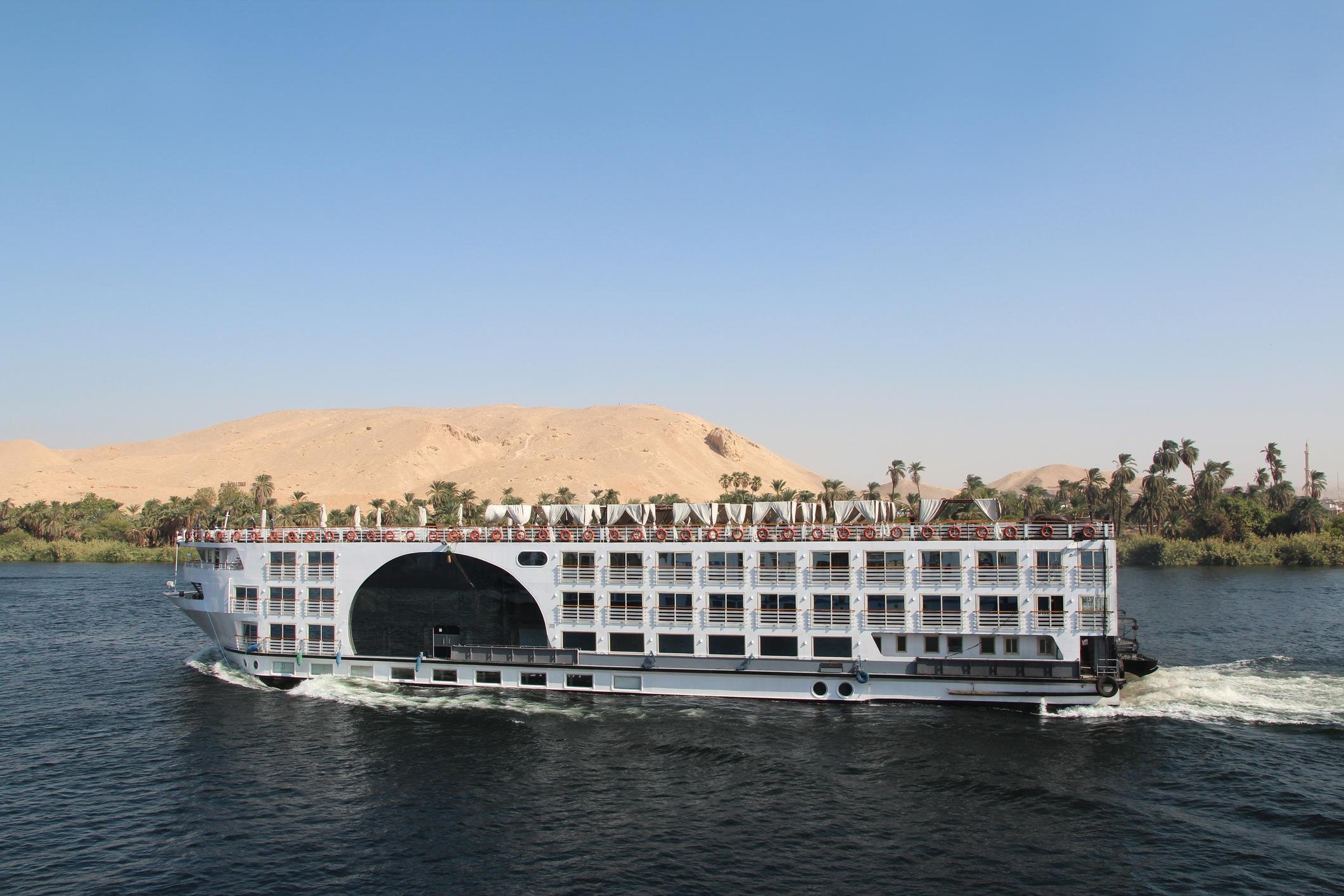
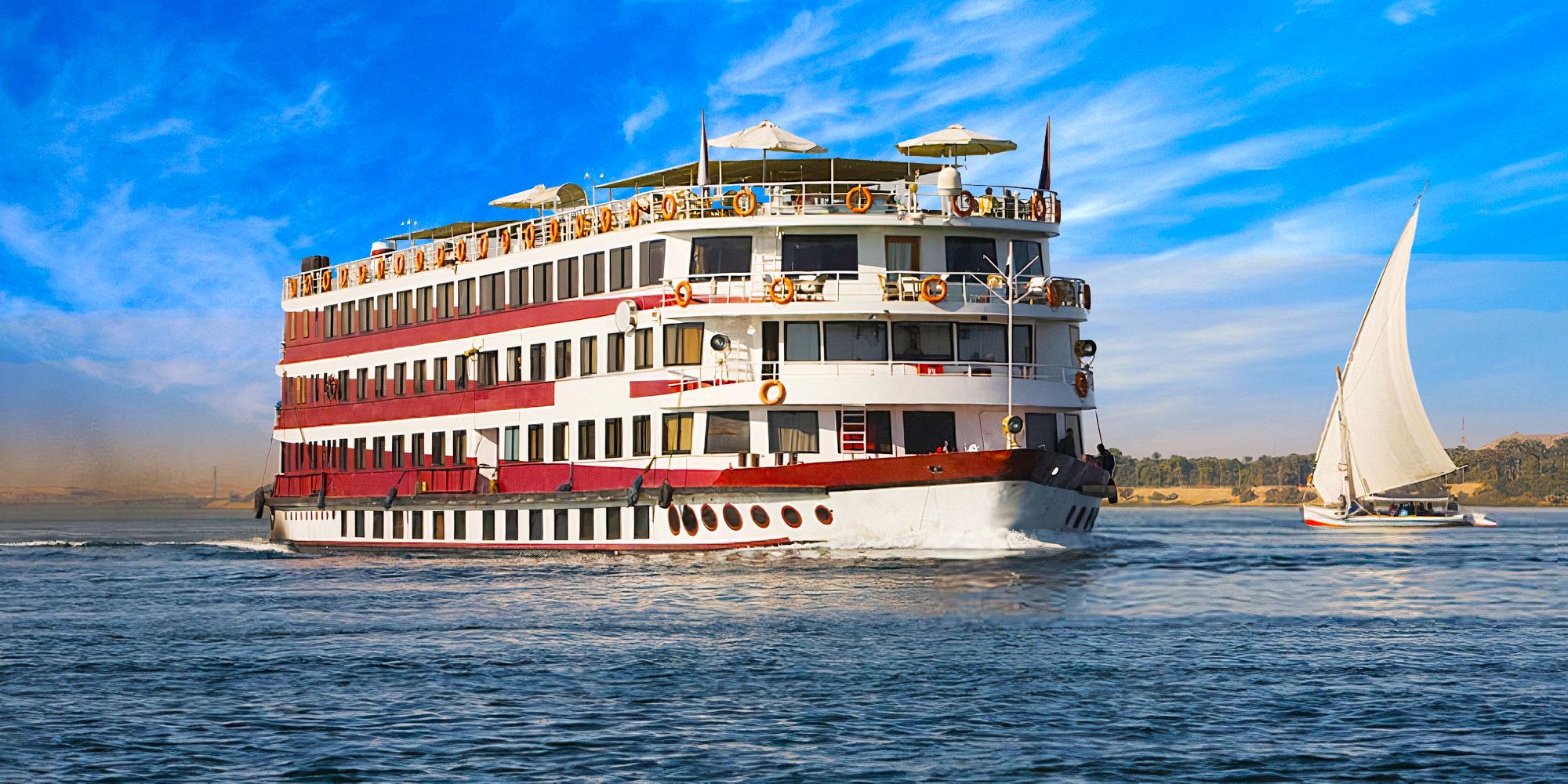
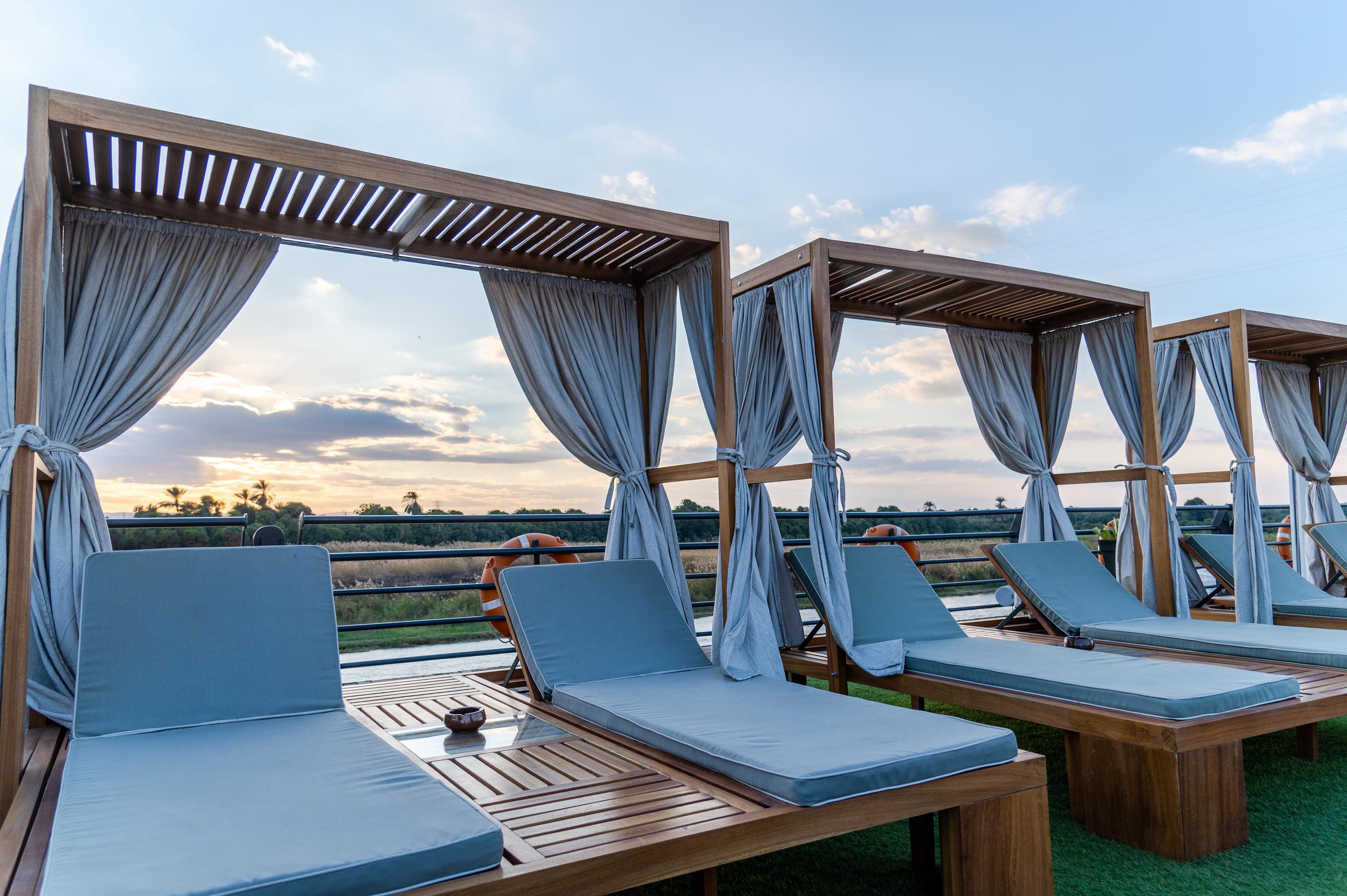
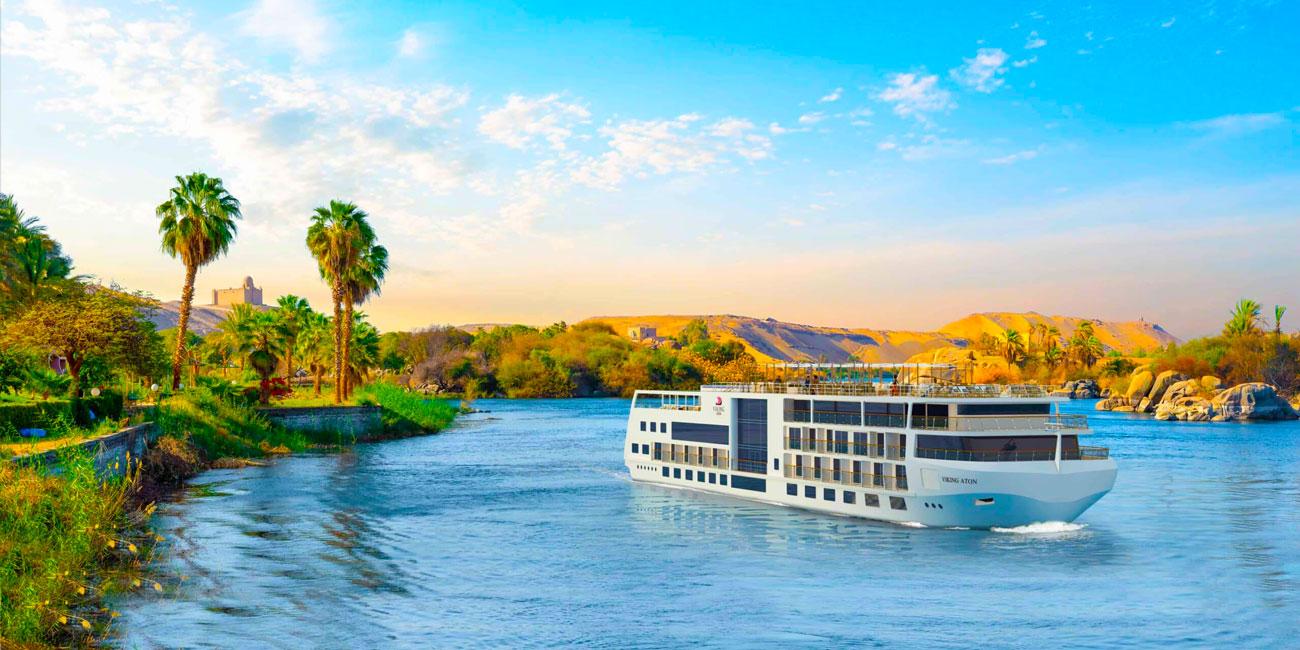
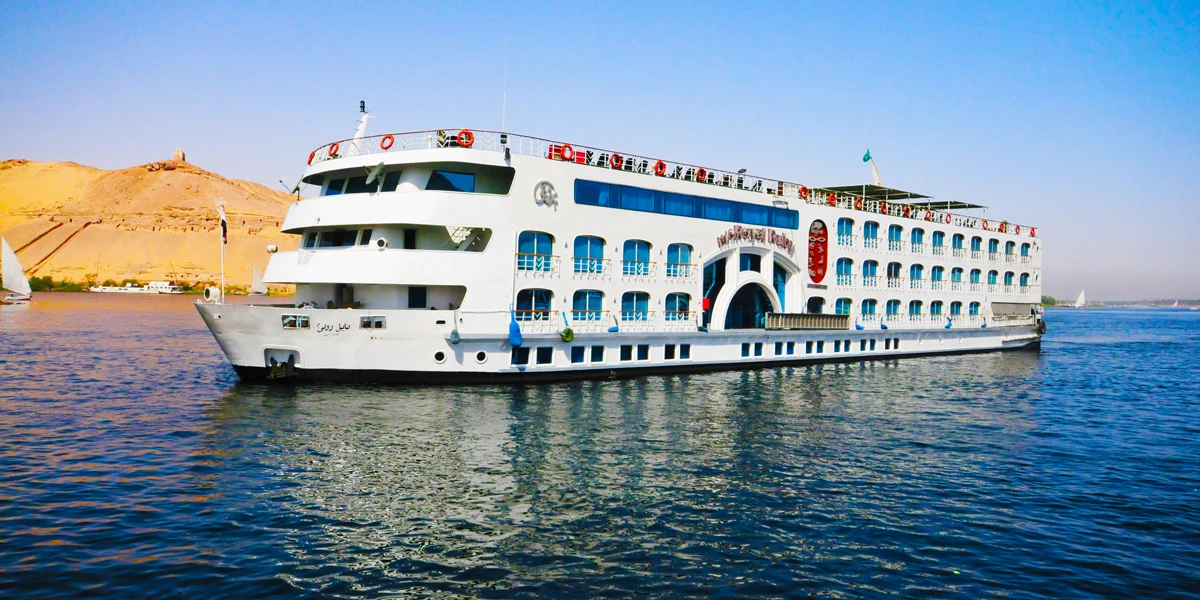
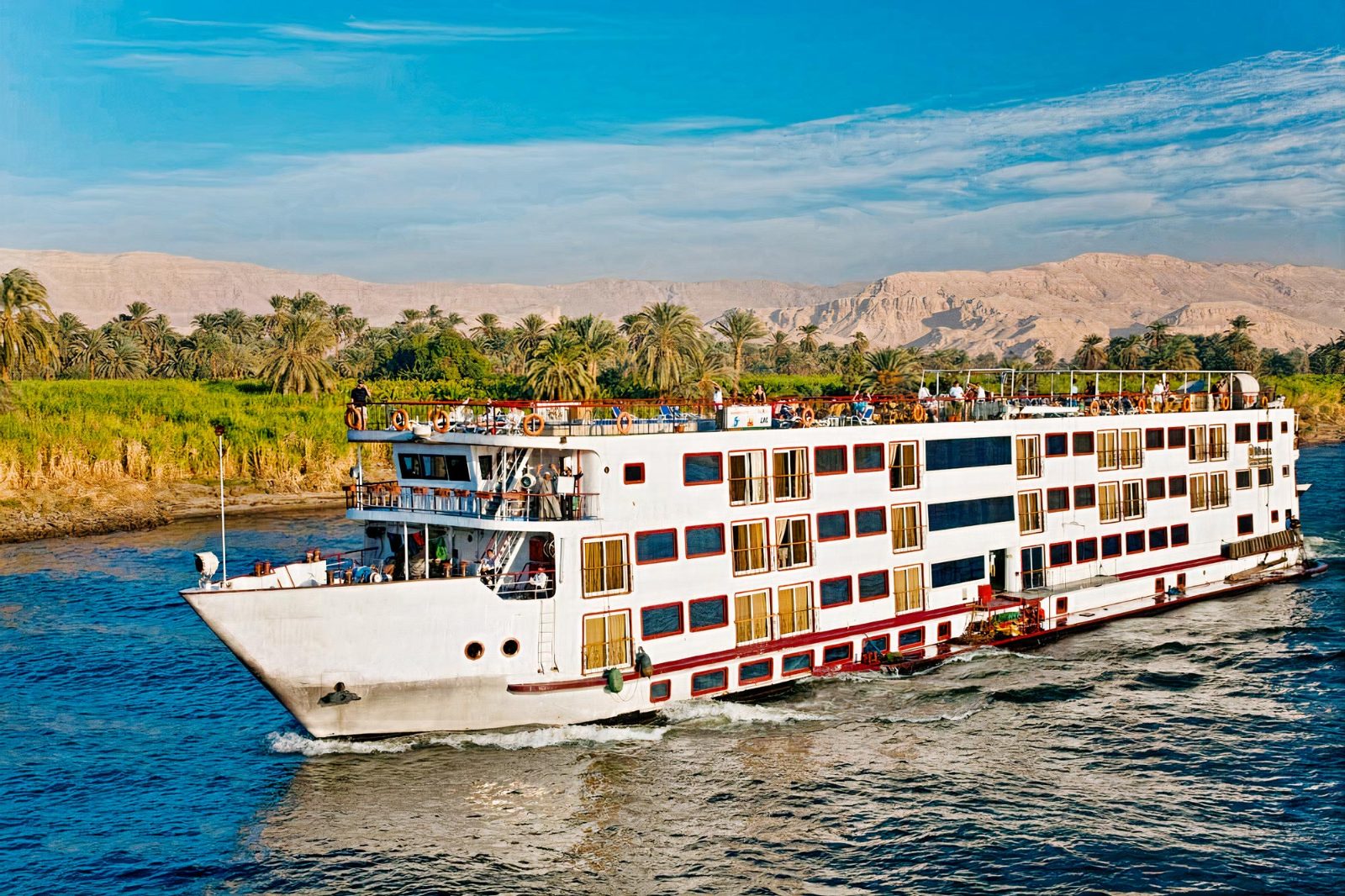
Contemporary vessels range from 40-cabin motor ships to reconstructed sail-rigged dahabiyas, all regulated by Egypt's Ministry of Tourism. Onboard facilities include air-conditioned cabins with river-view windows, sun decks for observing the agricultural delta, and dining salons serving meals during daylight navigation. Shore excursions pause at Dendera's Hathor temple, the Greco-Roman colonnades at Esna, and the twin sanctuaries at Kom Ombo. The passage through Luxor encompasses both the East Bank's Karnak complex and the West Bank's royal necropolises, while the final leg terminates at Aswan's granite quarries and Philae's island temple, relocated stone by stone after the High Dam's construction in 1970.
The Nile River cruise operates year-round, with morning departures timed to the prevailing north wind and daily temple landings scheduled around site opening hours. Four-day itineraries cover the Aswan-Luxor corridor, while six- and eight-day packages include Cairo's Giza plateau and the option of a southbound extension to Abu Simbel's rock-cut colossi. Navigation is uninterrupted except during the brief annual maintenance closures of Esna Lock, typically scheduled in late summer.
The temples lining the banks were designed with river access in mind: processional causeways descended directly to stone quays.
The cruise has an entrance fee of 0 USD, as pricing is based on tour packages rather than standard gate entry. Cruise costs depend on your selected package.
Weather · crowds · average price — dots go green to amber to red as each metric rises.
September to November offers milder temperatures and stable river conditions. Crowds begin to increase as the peak winter season approaches.
December to February provides the most comfortable weather for temple exploration. This period is the most popular time for a nile cruise from cairo to luxor and aswan.
March to May features pleasant days, though occasional desert winds can occur. Visitor numbers are moderate compared to winter.
June to August experiences very high temperatures across Upper Egypt. Travelers should prioritize early morning activities to avoid the peak heat.
Drink water frequently to combat the arid climate along the Nile River. Always rely on sealed bottled water provided during your nile cruise from cairo to luxor and aswan.
Wear sturdy, closed-toe walking shoes to navigate uneven stone floors at ancient sites. Sandals are suitable for deck time but not for intensive temple touring.
Apply high-SPF sunscreen and wear a wide-brimmed hat during midday hours. The sun exposure on the river is significantly stronger than in urban centers.
Schedule temple visits for the early morning to minimize heat exposure. Most organized nile cruise from cairo to luxor and aswan tours depart early to avoid the peak afternoon sun.
Keep small amounts of Egyptian Pounds for local tipping and market purchases. While cards are accepted on the ship, cash is necessary for local guides and artisanal shops.
The Nile River has served as Egypt's central artery since the earliest dynastic periods, when pharaohs commissioned wooden vessels to transport stone blocks from Aswan's granite quarries to construction sites in Memphis and later Thebes. By the Middle Kingdom (circa 2055–1650 BCE), royal barges adorned with gold leaf carried rulers between administrative centers, establishing the Cairo-to-Luxor-and-Aswan corridor as the empire's logistical spine. Priests navigated southward to Philae's temples, while merchants ferried grain, papyrus, and linen northward to Mediterranean ports. The river's predictable flooding calendar synchronized agriculture, religion, and governance, making navigation both sacred duty and economic necessity. European travelers began documenting Egypt's riverine monuments in the late eighteenth century, following Napoleon's 1798 expedition, which included engineers who mapped temple locations along the Nile's banks. British entrepreneur Thomas Cook launched the first organized tourist sailings in 1869, coinciding with the Suez Canal's inauguration. His steam-powered dahabiyas introduced fixed itineraries linking Cairo's Islamic quarters to Karnak's hypostyle halls and Abu Simbel's colossal statues. By the 1920s, luxury river vessels featured dining salons and observation decks, catering to archaeologists and affluent collectors drawn by Howard Carter's 1922 Tutankhamun discovery. The Aswan Low Dam, completed in 1902, stabilized water levels but submerged Nubian villages, foreshadowing later displacement. The 1960s Aswan High Dam project prompted UNESCO's intervention to relocate temples—Abu Simbel was disassembled and rebuilt 200 feet higher between 1964 and 1968. This engineering feat preserved Ramses II's monuments but drowned ancient sites beneath Lake Nasser, altering the traditional nile cruise from cairo to luxor and aswan route. Modern multi-day sailings now dock at Kom Ombo, Edfu, and Esna, where lock systems regulate passage. Floating hotels replaced older steamers, yet itineraries still mirror pharaonic trade paths. Political instability in 2011 temporarily halted tourism, but restoration work at Luxor Temple and increased security along riverbanks have sustained visitor interest. Today, nile cruise from cairo to luxor and aswan tours balance ancient navigation traditions with climate-controlled cabins, while debates continue over dam-related erosion threatening sandstone carvings at Karnak and Philae.
Middle Kingdom pharaohs established royal barge routes between Memphis, Thebes, and Aswan's granite quarries.
Napoleon's expedition mapped Nile temples, triggering European interest in riverine archaeology.
Thomas Cook launched the first commercial tourist sailings, synchronized with the Suez Canal opening.
Aswan Low Dam stabilized navigation but submerged lower Nubian sites.
UNESCO relocated Abu Simbel temples 200 feet upward to escape Lake Nasser's rising waters.
Arab Spring protests halted river traffic; security improvements later restored multi-day cruise operations.
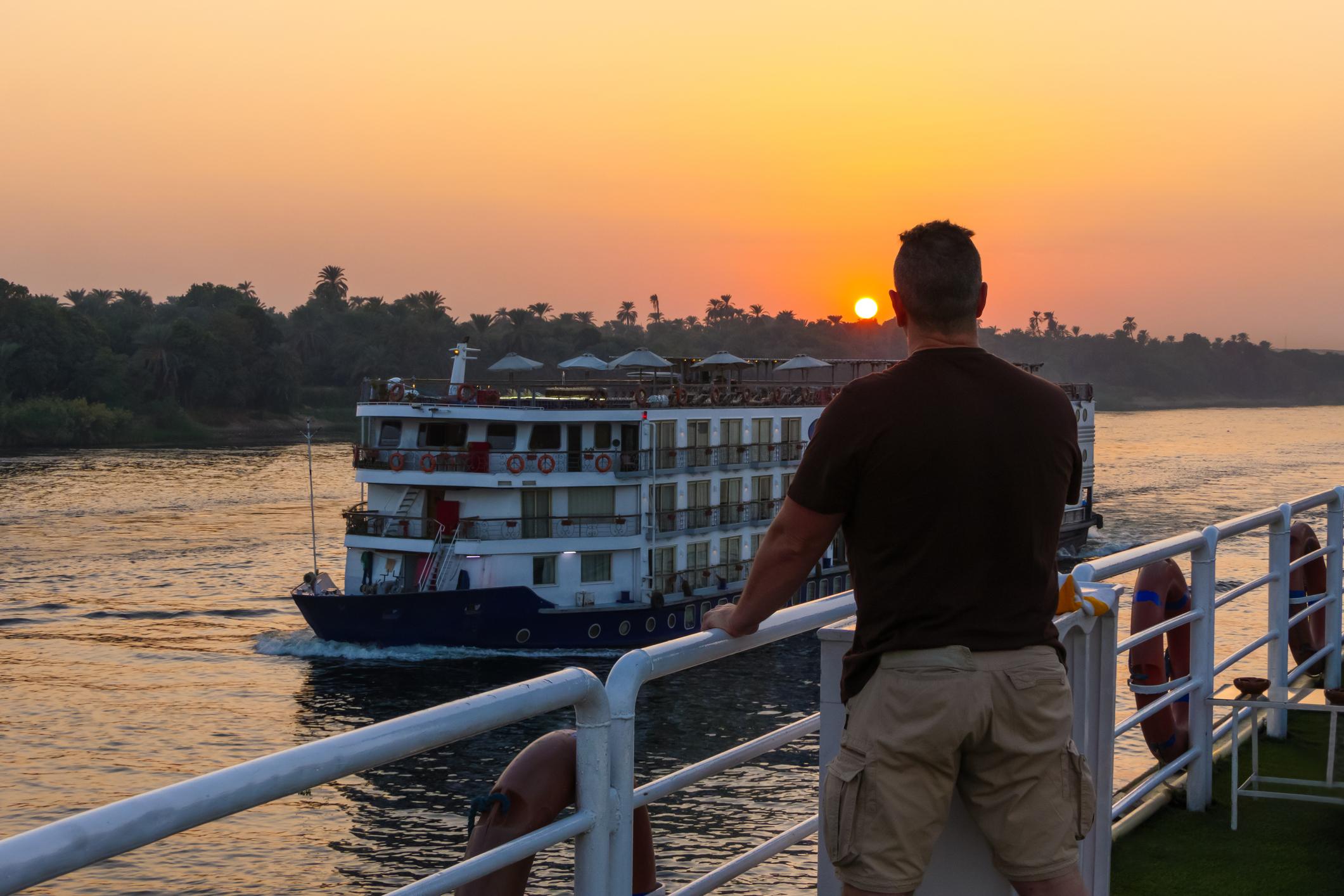
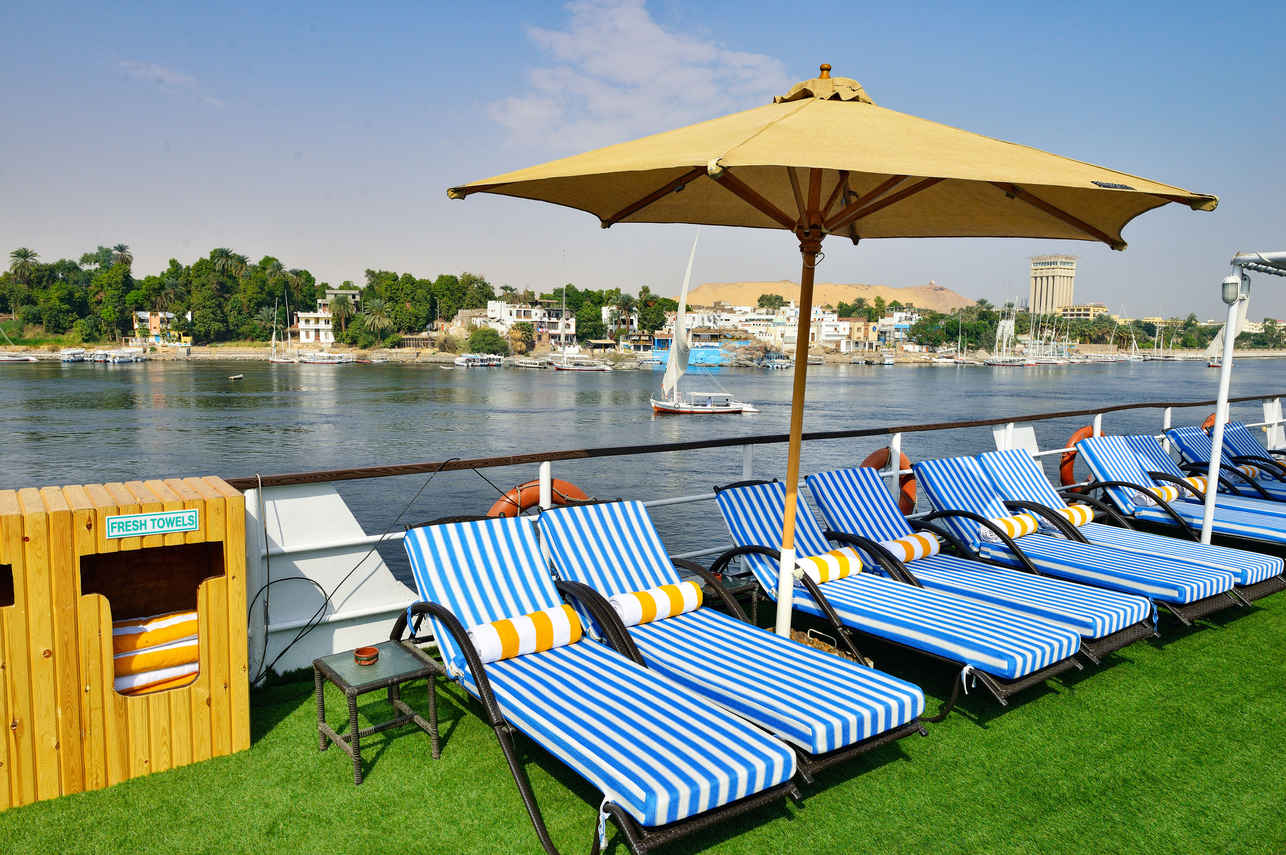
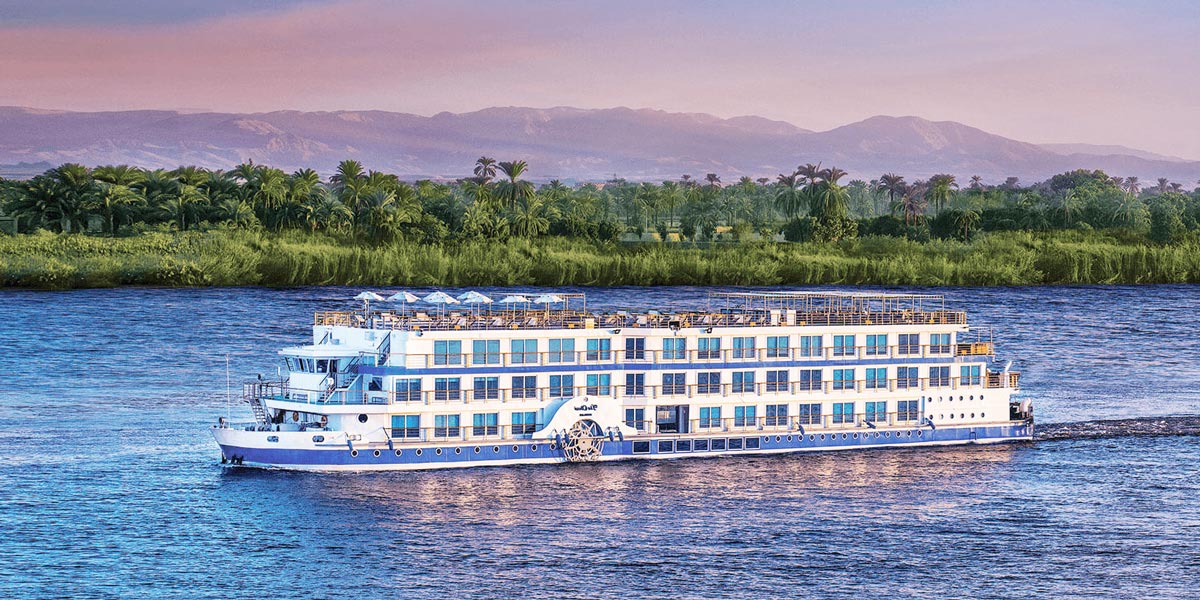
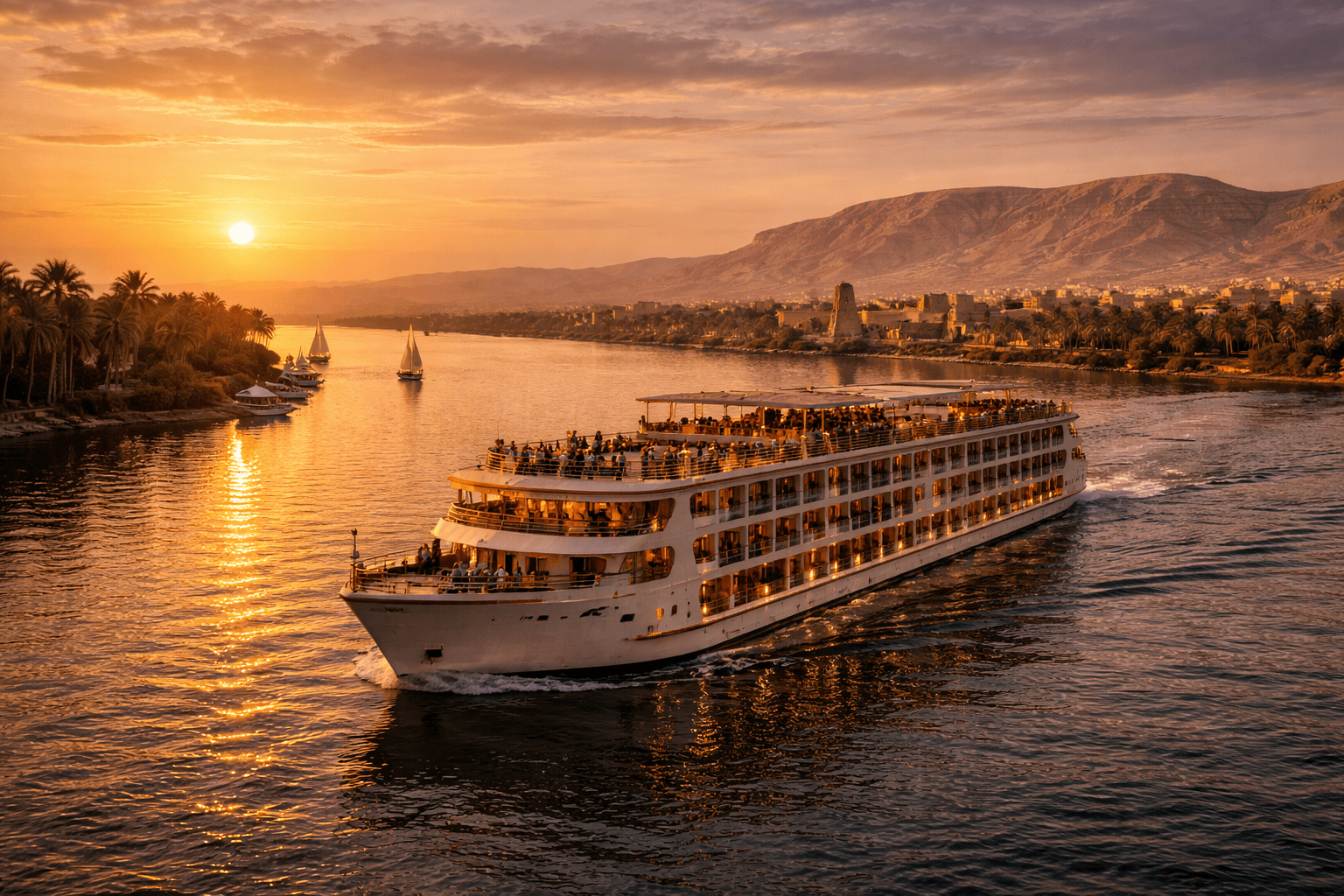
Capture the wide-angle perspective of river banks and passing traditional feluccas from the top level of the vessel. Position yourself at the forward railing for an unobstructed view of the water and horizon.
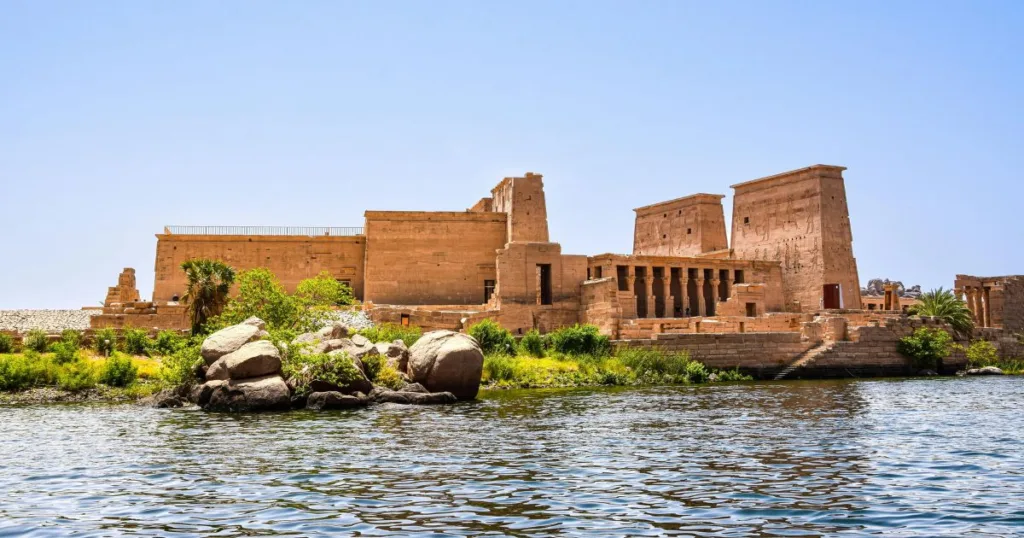
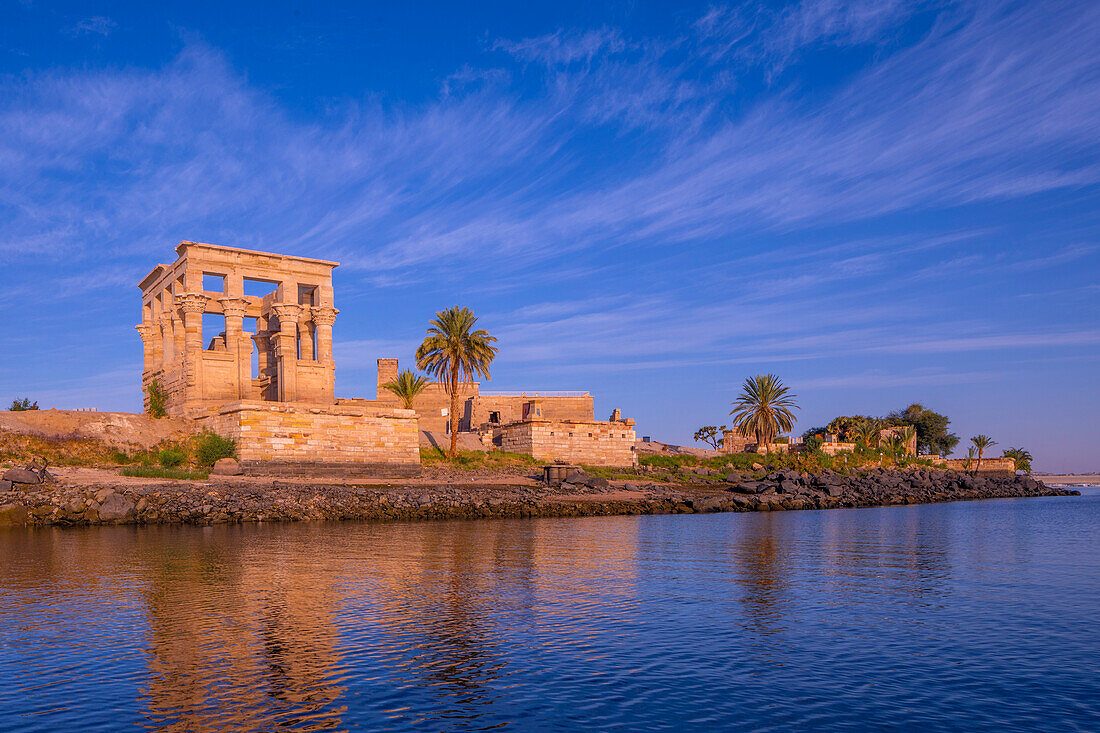
Photograph the intricate stone carvings and pylon structures as the boat approaches this island sanctuary in Aswan. This spot offers a symmetrical composition of ancient architecture reflecting in the water.
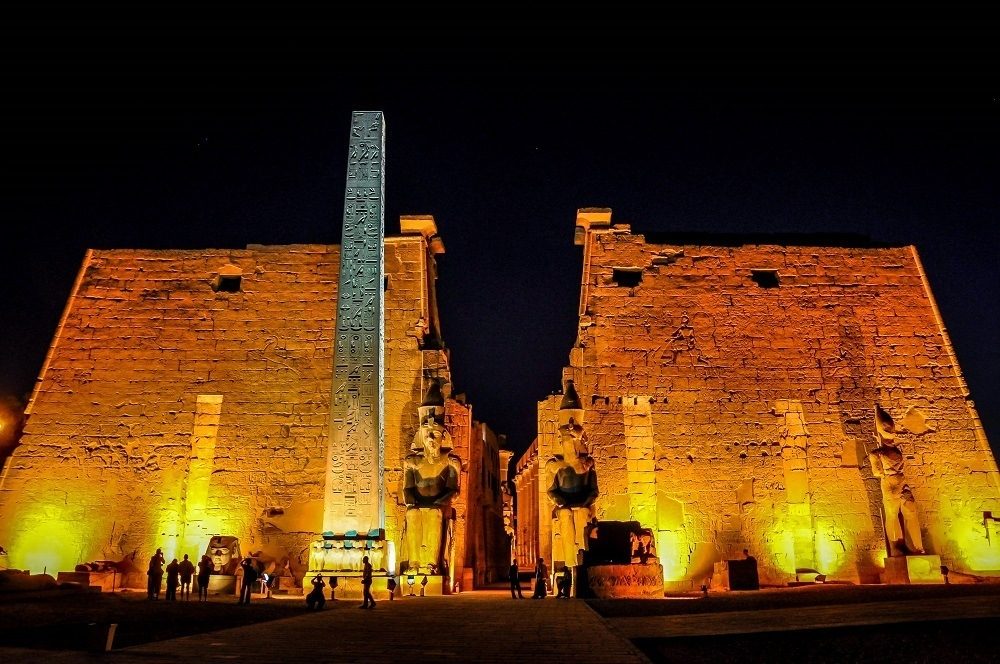
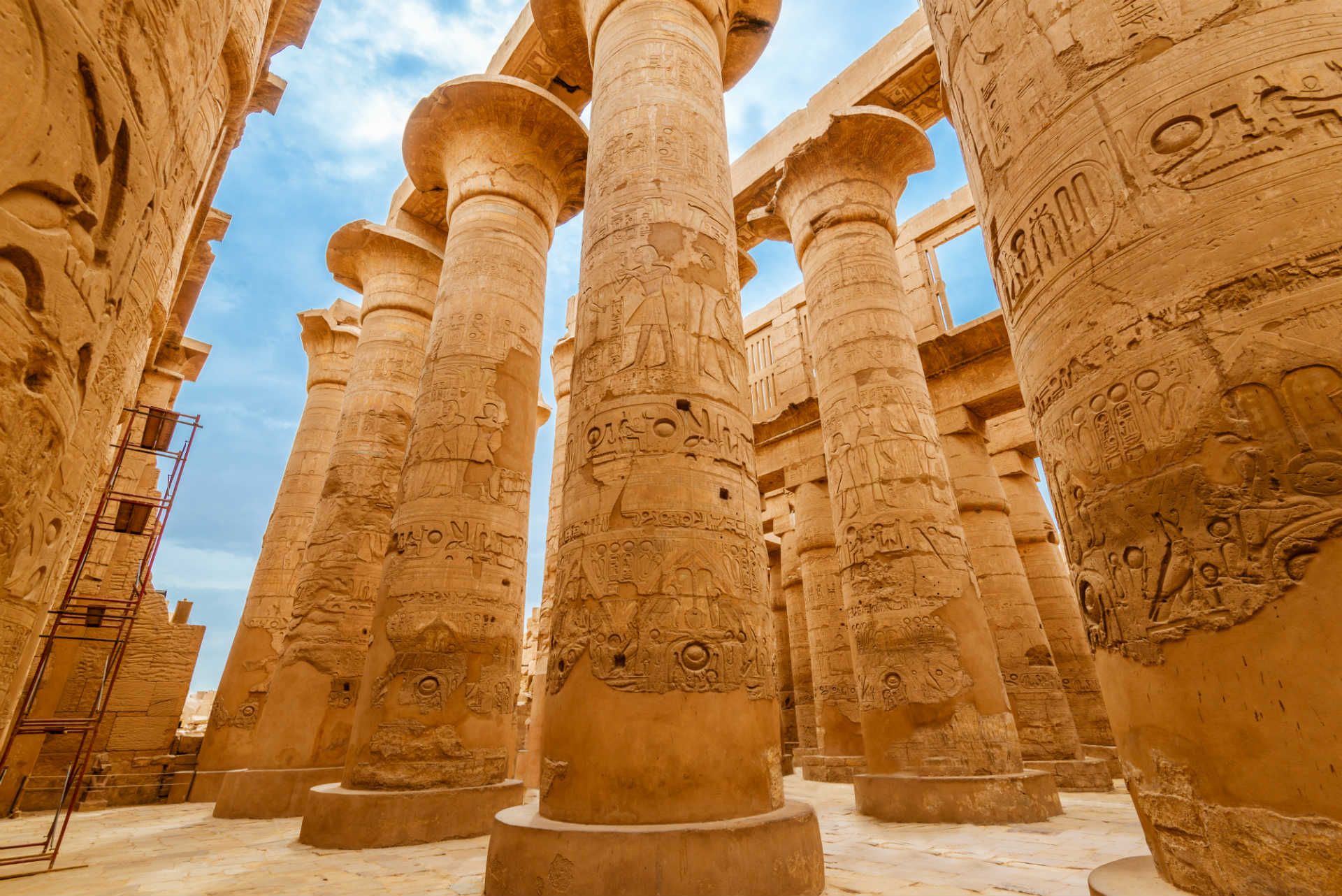
Shoot the illuminated columns and sphinx-lined walkways from the vantage point of the river cruise as it docks near the site. This perspective captures the light display against the night sky during a nile cruise from cairo to luxor and aswan.
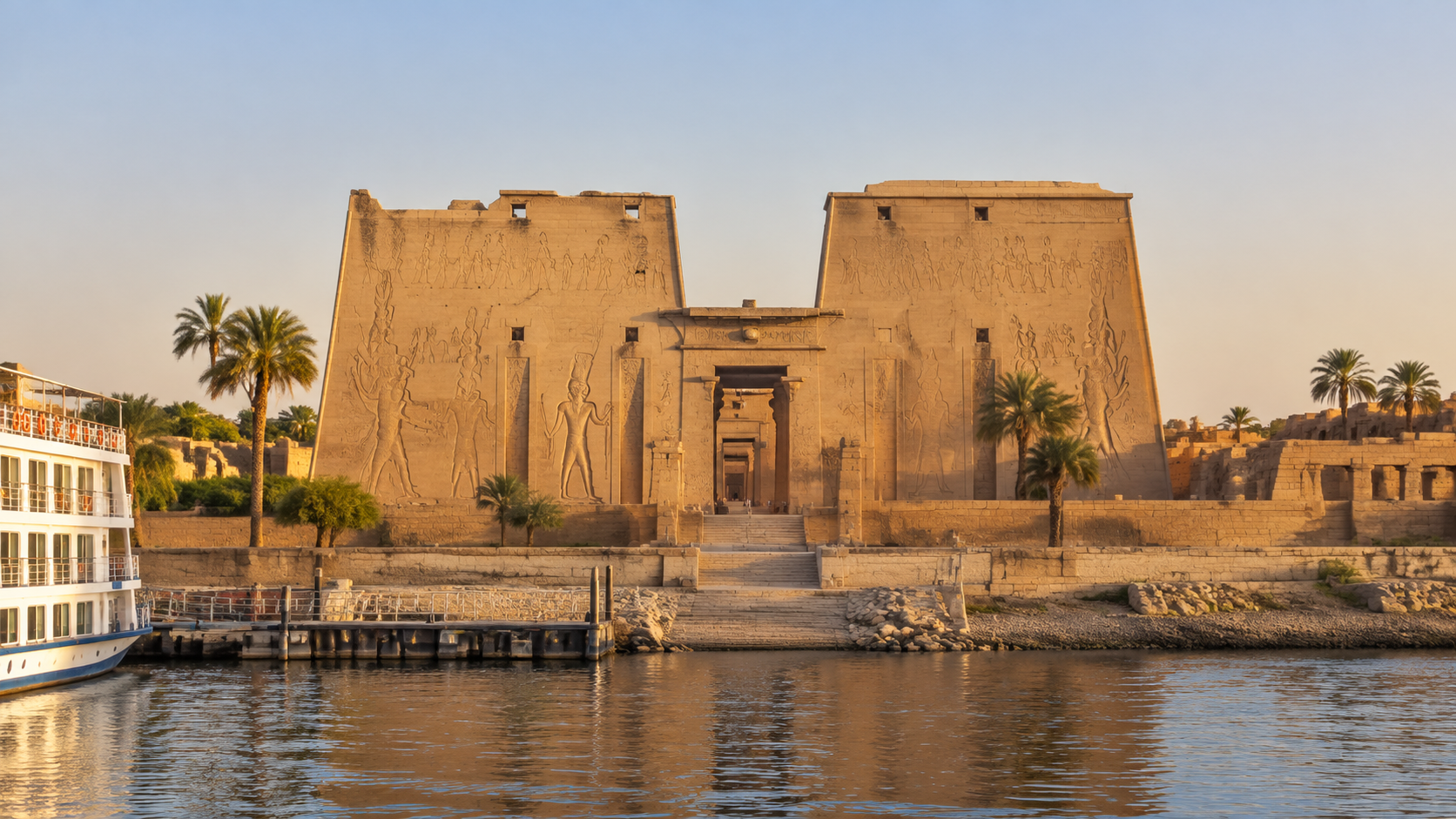
Use a telephoto lens from the docking area to frame the monumental gateway of the Temple of Horus. The scale of the sandstone pylons provides a sense of the sheer size of these nile cruise from cairo to luxor and aswan tours.
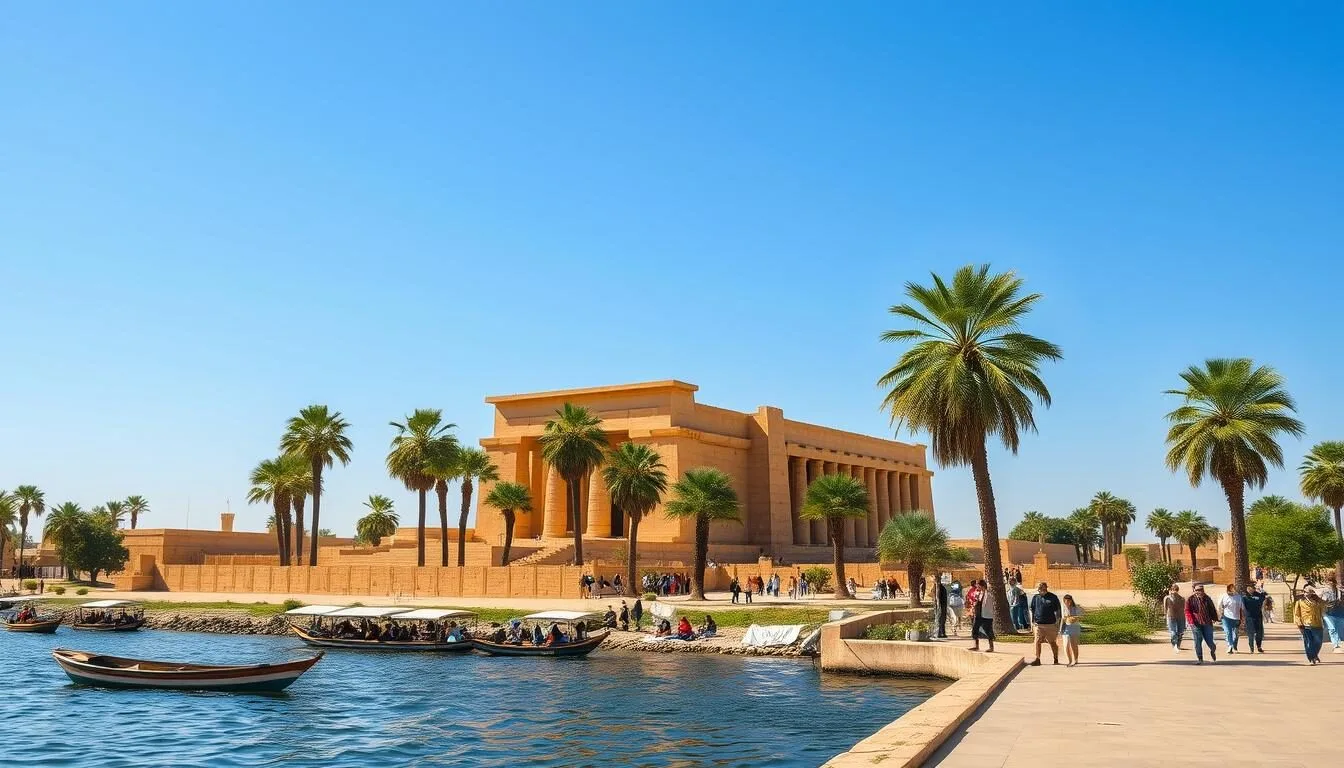
Frame the dual temple structures sitting directly on the river edge from the boat deck as you pull into the harbor. This location highlights the unique riverside positioning of these historical landmarks.
Embarking on a nile cruise from cairo to luxor and aswan with children requires careful planning to manage long days on the water. While the slow pace allows for relaxation, keeping younger travelers engaged between temple visits is essential for a smooth journey.
Most Nile river cruise vessels have limited deck space and narrow corridors, so lightweight, foldable strollers are recommended. Ensure your chosen nile cruise from cairo to luxor and aswan tours offer private transfers to minimize navigating crowded piers with gear.
This journey is best suited for children aged six and older who can appreciate the history and handle the heat. For nile cruise from cairo to luxor and aswan tickets, consider cabin configurations that provide enough floor space for families.
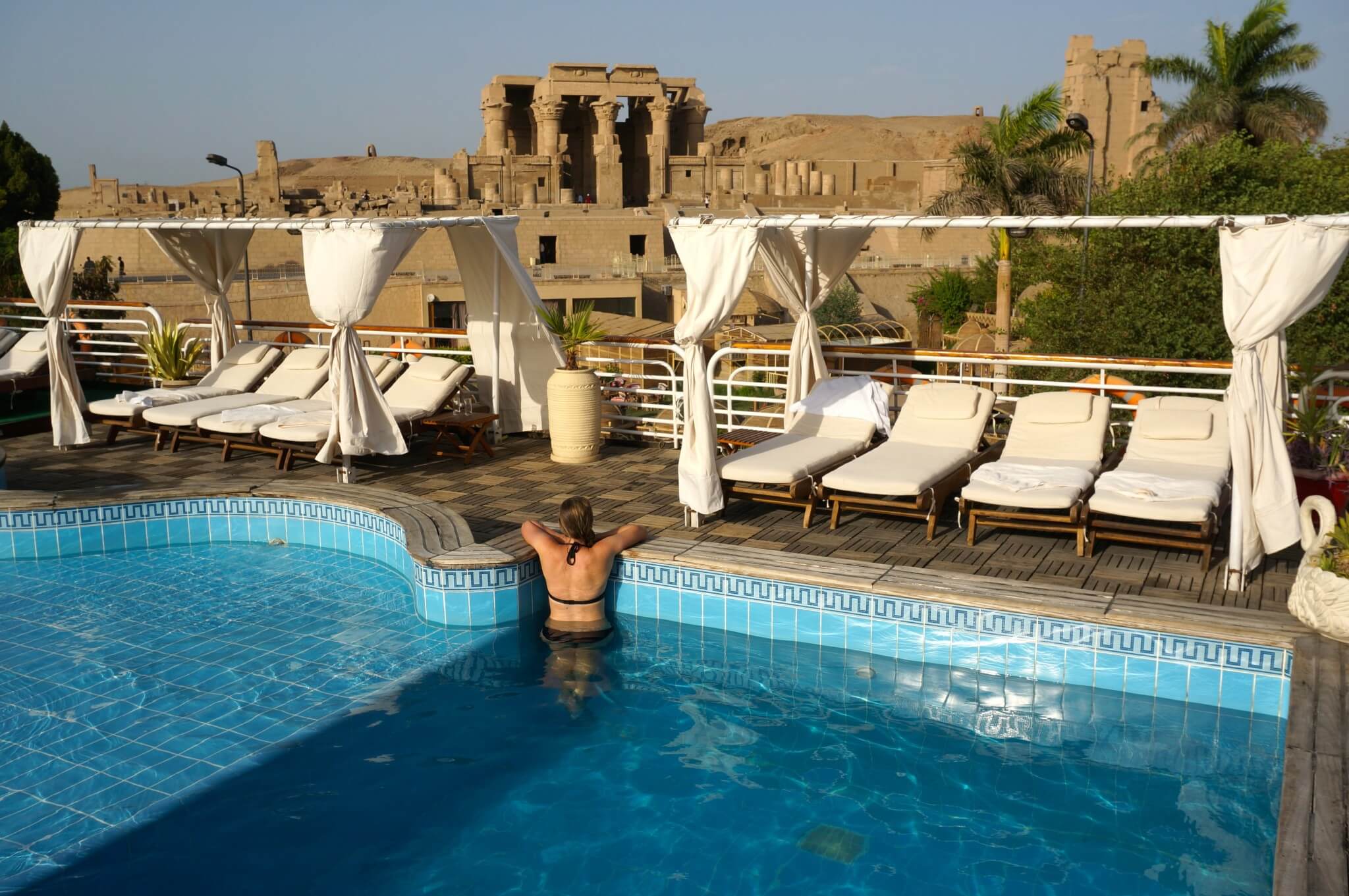
Check if your ship features a swimming pool or designated play area to keep children occupied during transit times. Most vessels offer basic baby-change facilities, though it is wise to verify specific ship amenities before booking your nile cruise from cairo to luxor and aswan tour.
Schedule temple excursions during the best arrival window of 08:00–18:00 to avoid the midday sun and ensure children remain comfortable. Balancing guided sightseeing with downtime on the sun deck helps maintain manageable energy levels throughout the voyage.
International buffet options are standard on river vessels, providing flexibility for picky eaters. Always carry bottled water and snacks, as the long stretches between docking points can leave little access to local markets.
Dining options during a nile cruise from cairo to luxor and aswan are typically centered around the vessel's full-board amenities, though local port stops offer diverse opportunities to explore riverside eateries. Travelers booking nile cruise from cairo to luxor and aswan tours often find authentic flavors in nearby markets as they dock at historical landmarks.
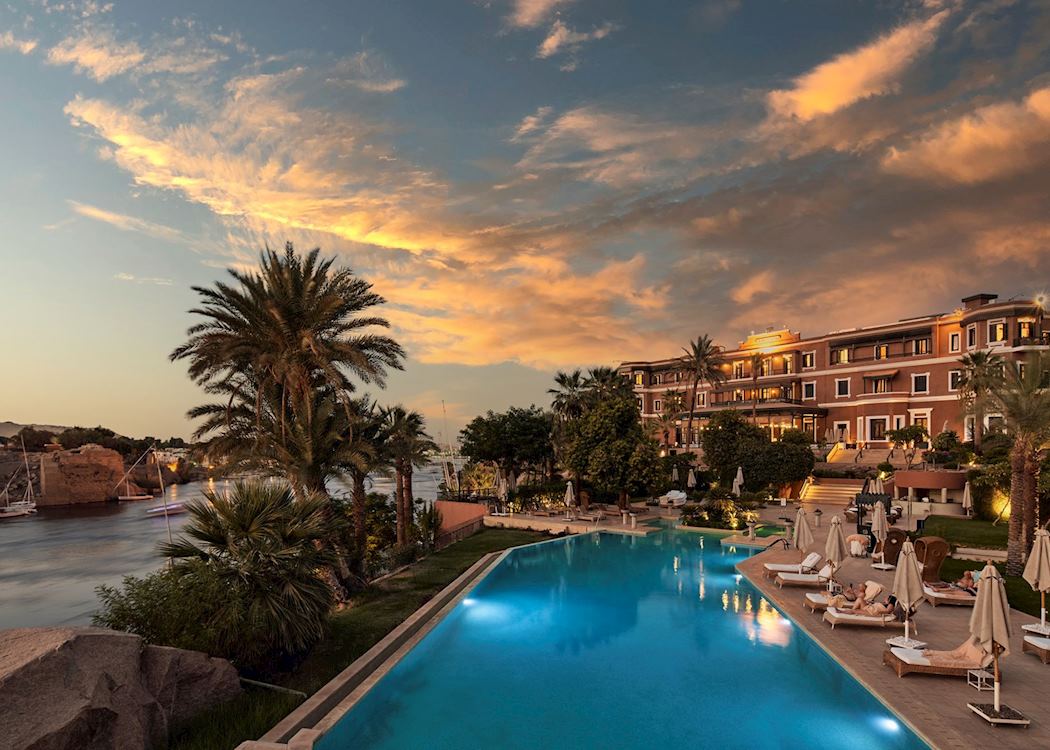
Located at the Old Cataract Hotel, this venue offers classic French cuisine with panoramic river views. Reserve in advance when planning your nile cruise from cairo to luxor and aswan tickets.
Everything you need to know for your journey
The best time to embark on a nile cruise from cairo to luxor and aswan is between October and April when temperatures are moderate. Mid-day summer heat can be intense for exploring.
Please contact us for more information.
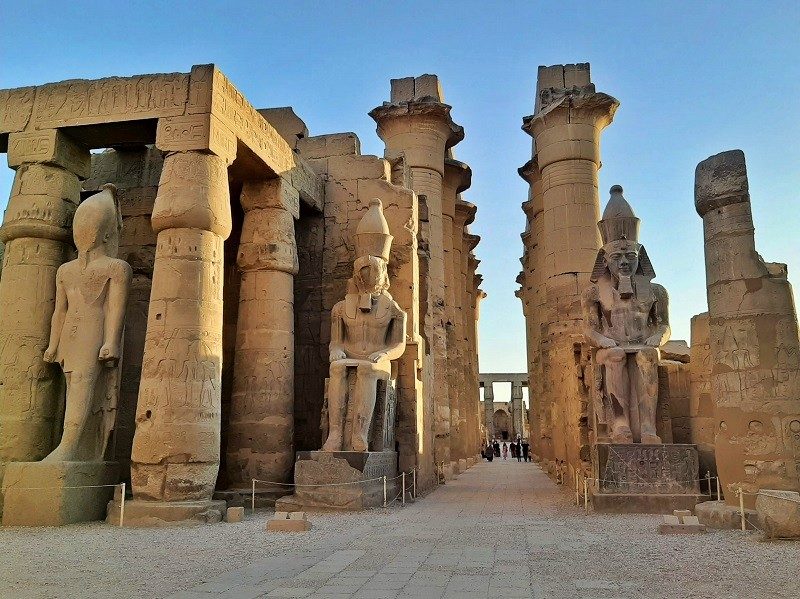
A massive complex of sanctuaries and pylons.
Ancient temple complex located on the east bank.
A site dedicated to the goddess Isis in Aswan.
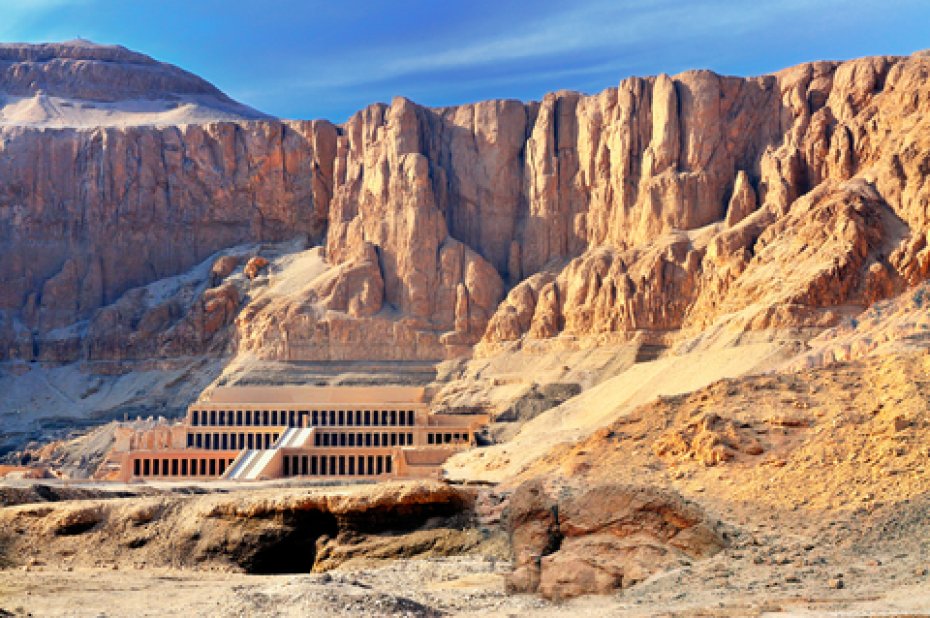
Royal burial ground for New Kingdom pharaohs.
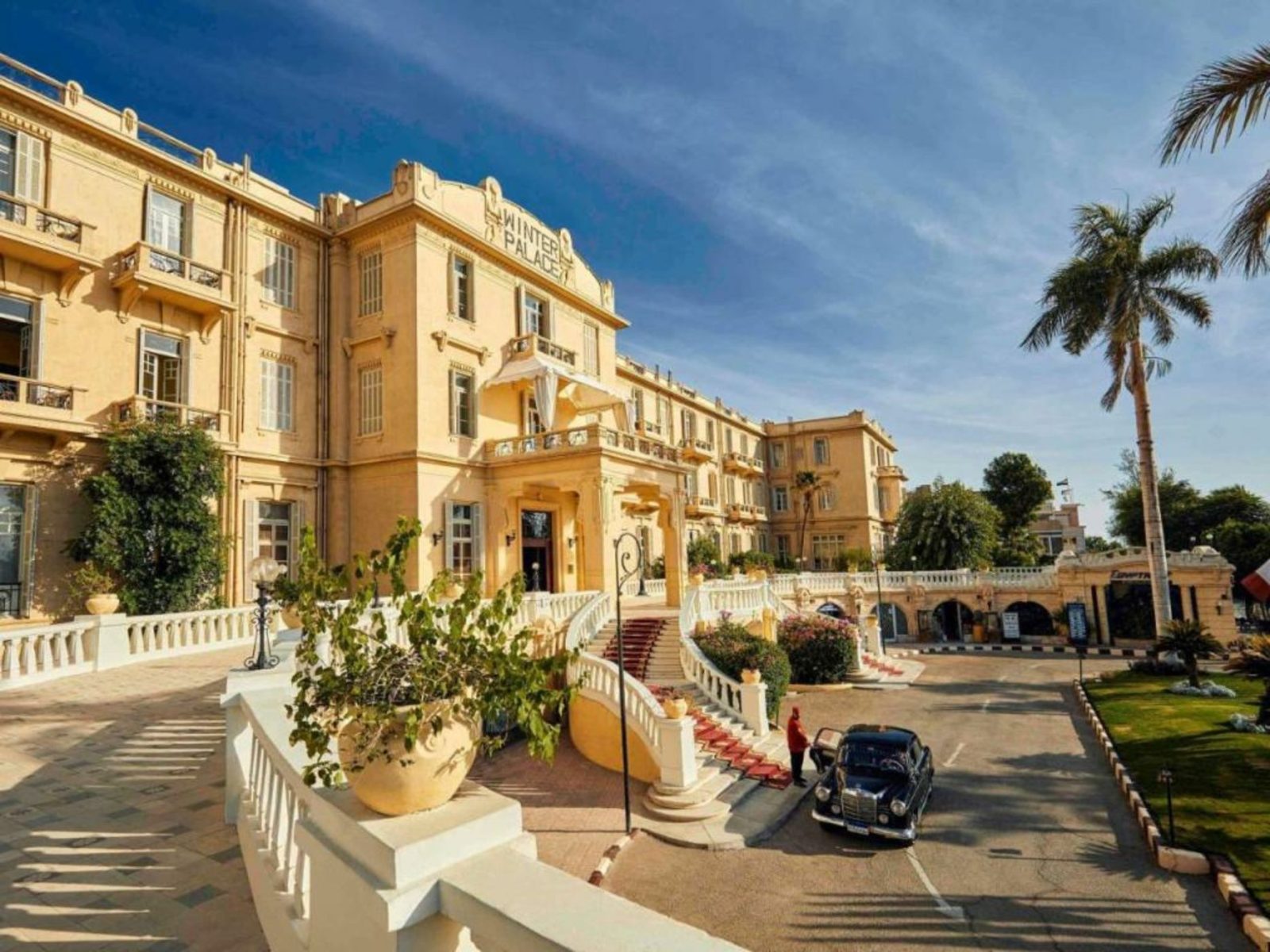
Historic property overlooking the river.
Classic colonial-style hotel in Luxor.
Central area with various lodging options.
Join thousands of happy travelers who have discovered this incredible experience
Book Your Experience Now